Book a Tour
Ready to experience the wonders of Peru? Get in touch, and we’ll help you plan the adventure of a lifetime!
Ready to experience the wonders of Peru? Get in touch, and we’ll help you plan the adventure of a lifetime!
Email Consent Notice
By checking the box, you consent to PeruVisit.com collecting and processing your email address for the purpose of sending newsletters, promotional offers, and information about tours in Peru.
You acknowledge and understand that:
For full details on how we manage personal data, please refer to our Privacy Policy.

Few things confuse travelers in Peru more than the weather.
People check a forecast, see mild temperatures, and pack accordingly—only to find themselves surprised once they arrive. The problem isn’t the forecast. It’s how it’s read.
Peru doesn’t follow a single weather system. It has several—and they often happen at the same time.
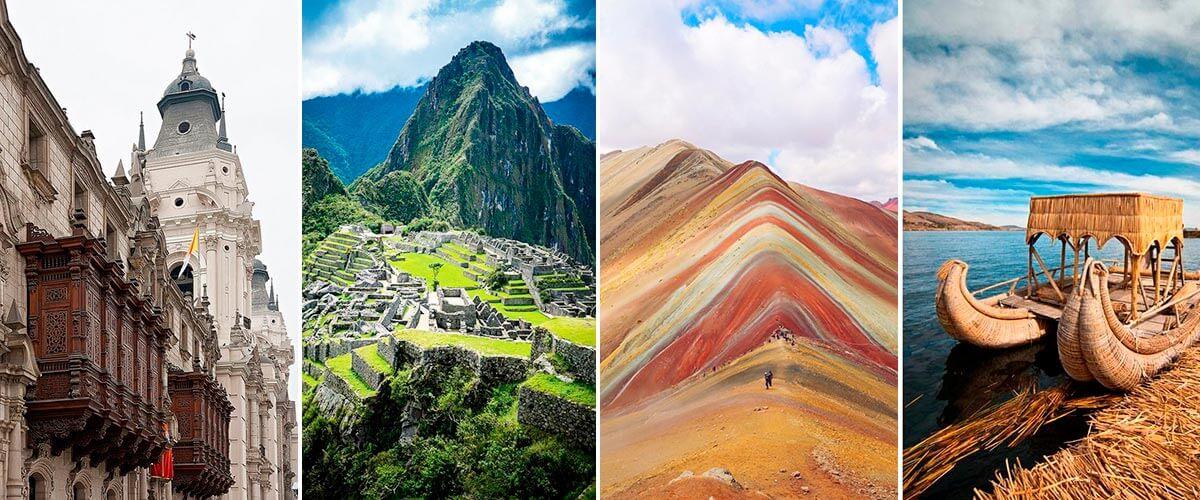
Most people check the weather for one city—often Lima or Cusco—and assume it will apply to the entire trip. But Peru’s landscapes vary too widely for that to work.
It’s not distance that changes the weather—it’s altitude. You can wake up to cool, damp air in Lima, spend midday in warm sun in the Sacred Valley, and feel chilled again in Cusco by evening. And that might all happen within the same week.
Peru doesn’t follow seasonal patterns that many travelers are used to.
Along the coast, winter is cool and often grey. In the Andes, winter (May–September) is usually dry and sunny during the day, cold at night. Rainy season (roughly November to March) brings short but intense afternoon showers, often surrounded by sunshine.
Travelers often say:
“The forecast said rain, but it was sunny most of the day.”
“It looked warm, but evenings were cold.”
And both statements are true. That’s how Peru’s weather works.
Altitude changes how weather feels.
Even when the air is cool, the sun at high elevations can burn quickly. Wind also changes everything—two days with the same temperature can feel very different depending on the breeze.
That’s why layering works far better than packing based on exact temperatures from a weather app.
Instead of asking “What will the weather be?”, try asking:
These questions are far more useful—and they lead to better packing and fewer surprises.
Peru’s weather is rarely a problem when you know what to expect. But when people rely on a single forecast, or plan based on assumptions, discomfort usually follows.
At Peruvisit, we design routes with weather patterns and altitude changes in mind—so your days feel balanced, not unpredictable, even when conditions shift.
Traveling through Peru means moving through different landscapes, light, and air. Understanding that upfront makes the journey feel smooth, not complicated.
Plan Your Trip To Peru:
Part 1: Pack for Three Climates
Part 2: Which Tickets to Book in Advance (and Which Not To)
Part 3: Why Your First City Matters More Than You Think
Part 4: What to Pack (and Why “Just in Case” Backfires)
Part 5: Weather in Peru (Why One Forecast Isn’t Enough)
Part 6: Money in Peru (What Works, What Doesn’t, and Why Improvising Is Risky)
Part 7: Mobile Connection in Peru (Which Operator Works, and Where)
Part 8: Health & Altitude (What Actually Helps, What Doesn’t)
Part 9: Safety in Peru (What Actually Matters, What’s Mostly Noise)
Part 10: How To Make Your Trip Feel Effortless
Get in touch, and we’ll help you plan the adventure of a lifetime!
